
Propane Tank Buying Guides
How to Choose the Right Propane Tank for Your Property
Oct
How to Choose the Right Propane Tank for Your Property
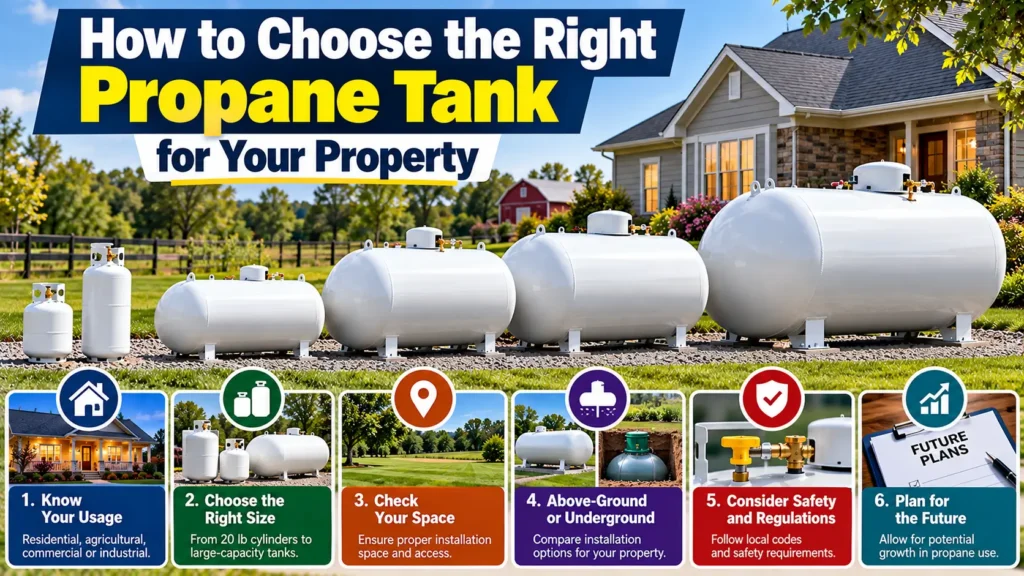
How to choose the right propane tank for your property depends on what will use the fuel, how much propane you expect to consume, where the tank can be installed and which storage equipment is suitable for the application. A home, farm, restaurant and industrial facility can have very different requirements. Starting with the property’s actual needs helps you compare suitable options before committing to a purchase.
Long Beach Steel Corp supplies propane tanks and LPG storage equipment for different applications. This guide takes a practical approach to evaluating your property, identifying the appropriate equipment type and preparing the information needed to make an informed purchasing decision.
1. Start by Assessing Your Property
Before browsing propane tanks, identify the purpose of the proposed installation. Consider the equipment that will use propane, how frequently it operates and whether fuel demand changes throughout the year.
A property using propane only for cooking may have different requirements from one that also uses propane for heating, water heating and backup power. A farm may experience seasonal demand, while a commercial facility may need a consistent supply throughout its operating hours.
Make a list of the appliances, machines or processes that will use propane. Record their fuel consumption where available, expected operating hours and any plans to add equipment. This information gives a propane supplier or qualified system designer a useful starting point for evaluating your requirements.
2. Match the Tank Type to the Intended Use
Propane storage equipment is not interchangeable simply because different containers hold the same fuel. The correct type depends on the application, installation method and equipment specifications.
Stationary ASME Propane Tanks
ASME propane tanks are commonly used for fixed storage systems serving residential, agricultural, commercial and industrial properties. They are available in different capacities and configurations, with suitability determined by the vessel’s actual specifications and intended service.
For example, Long Beach Steel Corp offers a 120 gallon ASME propane tank, a 500 gallon ASME propane tank and a 1000 gallon ASME propane tank. These options provide starting points for comparing stationary storage capacities.
Portable DOT Propane Cylinders
DOT specification propane cylinders are generally associated with portable applications and applicable transportation requirements. A 20 lb propane cylinder may suit compatible portable equipment, while a 33.5 lb forklift propane cylinder is designed for compatible forklift applications.
Always confirm the cylinder configuration, connection and intended use against the equipment manufacturer’s requirements before purchasing.
3. Estimate the Storage Capacity You Need
The right tank capacity depends on fuel consumption, delivery frequency and the storage requirements of the property. Choosing a tank that is too small may lead to frequent deliveries, while an unnecessarily large tank may increase purchase, transport and installation costs.
Ask your propane supplier or qualified professional to estimate the storage capacity needed for your equipment and operating schedule. The calculation should account for peak demand, seasonal variations and the practical interval between deliveries.
Remember that nominal tank capacity is not the same as the amount of liquid propane that can safely be loaded. Filling limits depend on the tank and applicable requirements. For a more detailed comparison of common capacities, read our Propane Tank Sizes: A Complete Guide for Buyers.
4. Evaluate the Available Installation Space
A tank may have the required capacity but still be unsuitable for your property if there is insufficient room for installation or servicing. Evaluate the proposed location before ordering equipment.
Consider the distance from buildings and property boundaries, access for delivery vehicles, ground conditions, nearby equipment and the space needed for inspection and maintenance. Applicable clearances and installation requirements must be confirmed for the specific tank and location.
Do not rely on visual estimates alone. A qualified installer should assess the site and confirm that the proposed equipment can be installed appropriately.
5. Decide Between Above-Ground and Underground Installation
Above-ground and underground installations have different site requirements and maintenance considerations. The best option depends on the property’s layout, appearance preferences, ground conditions and the type of tank available.
Above-Ground Tanks
An above-ground tank remains visible and can provide more direct access for authorized inspection and servicing. The installation still requires suitable space, delivery access and protection from foreseeable hazards.
Underground Tanks
An underground tank can reduce the visual impact of storage equipment, but the vessel must be specifically suitable for buried service. Soil conditions, drainage, corrosion protection and future inspection access all need to be considered.
Never assume that an above-ground tank can be buried. Verify the manufacturer’s specifications and installation approval before purchasing. Our Above Ground vs Underground Propane Tanks guide explains these differences in more detail.
6. Consider the Property’s Operating Requirements
The way a property operates can influence the most practical storage solution. Residential users may prioritize adequate fuel availability and convenient delivery arrangements. Agricultural businesses may need to accommodate seasonal activity, while commercial and industrial sites may depend on a steady supply during operating hours.
Consider what happens if fuel deliveries are delayed, whether demand fluctuates during the year and whether the property may expand. These factors can help determine the appropriate storage capacity and delivery plan.
For larger projects, evaluate the complete storage system rather than the tank alone. Piping, regulators, valves, monitoring equipment and other components must be compatible with the intended application and selected by qualified professionals.
7. Check the Tank’s Condition and Documentation
When comparing available tanks, confirm the specifications and condition of the actual vessel being offered. New, used and refurbished equipment can differ in history, appearance, documentation and suitability.
Ask for available nameplate information, manufacturer details, design specifications, inspection records and relevant certification documents. For used or refurbished tanks, request details about known history and repairs where available.
Do not assume that a tank is suitable for service based on its appearance or nominal capacity alone. Have a qualified professional evaluate its condition and suitability for the proposed installation.
8. Plan for Delivery, Installation and Total Cost
The purchase price is only one part of the overall project cost. Depending on the tank and site, additional expenses may include transportation, unloading, site preparation, supports, installation, compatible components and inspections.
Before requesting a quotation, establish whether freight is included, who is responsible for unloading and what documentation comes with the tank. Confirm that the delivery vehicle can access the site and that any necessary preparation will be completed before the equipment arrives.
Compare quotations using the same requirements. A lower purchase price may not represent better value if transportation, installation or required supporting equipment is not included.
9. Confirm Safety and Applicable Requirements
Propane tanks must be appropriate for their intended service and installed according to applicable requirements. The rules can vary depending on tank type, capacity, location and installation configuration.
For U.S. projects, the NFPA 58 Liquefied Petroleum Gas Code is an important reference for LP-Gas storage, handling, transportation and use. General safety information is available from the Propane Education & Research Council. For applicable U.S. transportation and hazardous-material requirements, consult the Pipeline and Hazardous Materials Safety Administration.
Confirm the requirements adopted by the authority responsible for your installation. Use qualified professionals for tank selection, installation and servicing, and follow the manufacturer’s instructions for the specific equipment.
Prepare Before Requesting a Propane Tank Quote
To make the purchasing process more efficient, prepare the following information before contacting a supplier:
- The property type and intended propane application.
- The equipment that will consume propane and its estimated fuel demand.
- Your preferred or professionally recommended storage capacity.
- Whether above-ground or approved underground installation is being considered.
- The installation location and available access for delivery.
- Whether new, used or refurbished equipment is acceptable.
- Any required specifications or documentation.
- Your delivery location and project timeline.
Providing these details helps the supplier identify relevant products and clarify which specifications, conditions and delivery options are available.
Find the Right Propane Tank at Long Beach Steel Corp
Choosing the right propane tank for your property starts with understanding the intended application, estimating fuel demand and evaluating the installation site. Tank type, capacity, condition, documentation, delivery logistics and applicable requirements should all be considered before making a purchase.
Long Beach Steel Corp offers propane and LPG storage equipment in a range of capacities and conditions. Browse our propane tanks for sale to compare available options for residential, agricultural, commercial and industrial projects.
Contact Long Beach Steel Corp to confirm current availability, specifications, condition, pricing and delivery arrangements. Before purchasing, verify that the specific vessel is suitable for your intended application and consult qualified professionals about the proposed installation.

Pingback: Propane Tank Sizes: | A Complete Guide for Buyers